
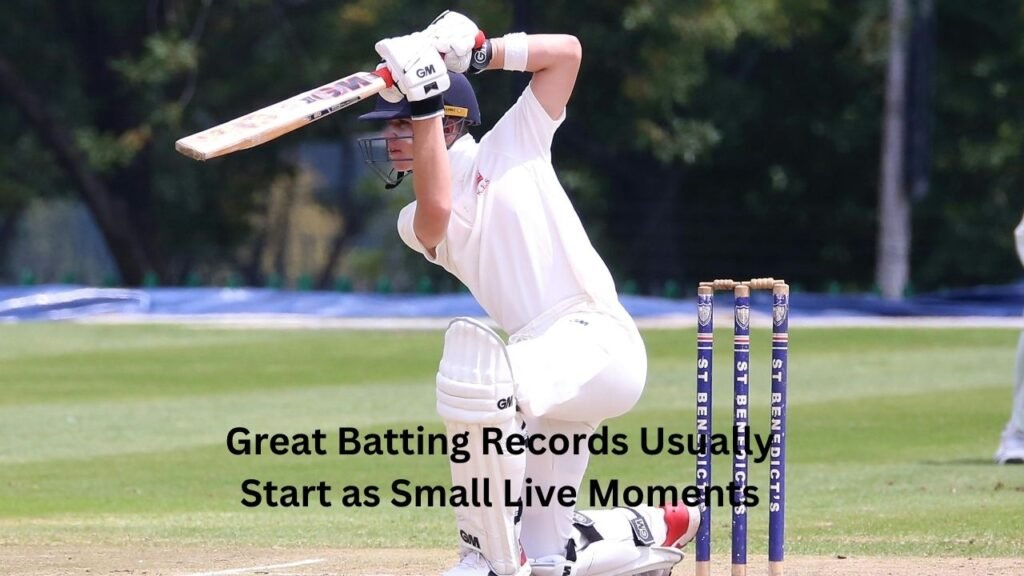

A big batting record looks clean after the match. The scorecard has the number, the balls faced, the fours, the sixes, the strike rate, and maybe a short line about how important the innings was. It all feels tidy once the game is finished. While the innings is happening, though, it rarely feels that neat. It begins with singles, leaves, mistimed shots, one good boundary, a partnership that settles down, and a batter slowly realizing the surface is no longer as difficult as it looked.
Scorecards only tell the story after the dust settles
Cricket fans love scorecards because they preserve the match in a simple shape. A 78 from 52 balls, a 104 not out, or a 160-run opening stand can be understood quickly when everything is over. But a scorecard cannot fully show how nervous the first ten balls felt, how long the batter needed to adjust, or how a quiet over changed the mood of the innings.
That is why many fans follow the live stage closely before they return to the final numbers. A person tracking whether a fluent fifty is turning into a match-shaping innings may keep this website open while watching the game, because live cricket pages help connect the score to what is happening right now. The record may be written later, but the clues arrive much earlier.
The first twenty balls can matter more than they look
Not every great innings starts with a burst of boundaries. Some begin awkwardly. A batter plays and misses, steals a few singles, watches the ball hold in the pitch, then slowly finds a scoring area. Those early balls often decide whether the innings becomes careless, patient, or dangerous.
For a fan who cares about batting records, that phase is worth watching closely. It shows whether the batter is reading length early, whether they are rotating strike, and whether the bowlers are being forced to change plans. A score of 18 from 21 balls can look ordinary, but it may become the base for something much bigger if the batter has already solved the conditions.
What makes an innings feel record-worthy
A record does not always feel like a record from the start. Sometimes the match gives hints before the numbers become large enough to notice.
- The batter stops taking risky options and still scores quickly.
- Singles become easy because the field spreads too early.
- Bowlers start missing their preferred length.
- A partner protects the stronger batter without slowing the innings.
- Boundaries come from timing rather than panic.
- The batting side controls the middle overs instead of surviving them.
Partnerships often carry the hidden work
Batting records usually put one name in bold, but partnerships do a lot of the work behind that number. A set batter can only build freely if the other end holds steady. Sometimes the partner scores quickly and removes pressure. Sometimes they simply turn over the strike and let the main batter stay in rhythm.
Live betting talk should stay separate from batting admiration
Because batting records can shift the mood of a match, live betting discussion often follows them. A batter reaching fifty, a chase settling down, or a sudden burst of boundaries can change how people talk about the game. For adults in places where betting is legal, that may sit around the live match experience, but it should not take over the cricket itself.
The better habit is to read the innings first. Notice the pitch, the field, the bowling options, and how the batter is scoring. A beautiful innings can still end with one mistake, and cricket is never honest with people who treat momentum like a promise.
The best records feel alive before they become history
The reason batting records stay with fans is not only the final number. It is the way the innings grew. The careful start, the first clean drive, the over where the field changed, the partnership that settled nerves, the bowler who lost control, and the crowd realizing something unusual might be happening all matter.
A final scorecard is useful because it keeps the record in place. Live cricket is different because it lets fans feel the record being built. That is where the pleasure sits for people who love batting: not only in reading that someone made a great score, but in watching the innings become great one over at a time.